Services
Tar and Chip
Tar and Chip Experts
Atkins Paving provides expert tar and gravel paving services, also known as chip seal. This paving method offers a durable and cost effective alternative to traditional asphalt. It is ideal for long driveways, private roads, parking areas, and rural or low traffic surfaces.
Our team uses a proven process that combines hot liquid asphalt with a layer of crushed stone to create a textured and long lasting surface. The chip seal method improves traction and helps protect the underlying pavement from water penetration and weather damage.
Tar and gravel paving is a popular choice for property owners who want a natural and rustic look without sacrificing durability. It works well for both residential and commercial clients who need a reliable and budget friendly solution that can handle regular use.
Atkins Paving manages every step of the process, from preparing the site and grading to applying the asphalt binder and stone chips, followed by proper compaction. We deliver a clean and consistent finish that performs well in a range of conditions.
We are proud to be one of the few paving companies in the area that specializes in chip seal and we are committed to providing dependable service with high quality results.
When tar and chip is the right choice
Long driveways and private roads
Because tar and chip costs less per square foot to install than hot-mix asphalt, it is a natural fit for driveways over a few hundred feet, farm lanes, and HOA private roads. The savings on a long drive can be substantial without giving up durability.
Rustic, wooded, and lakefront properties
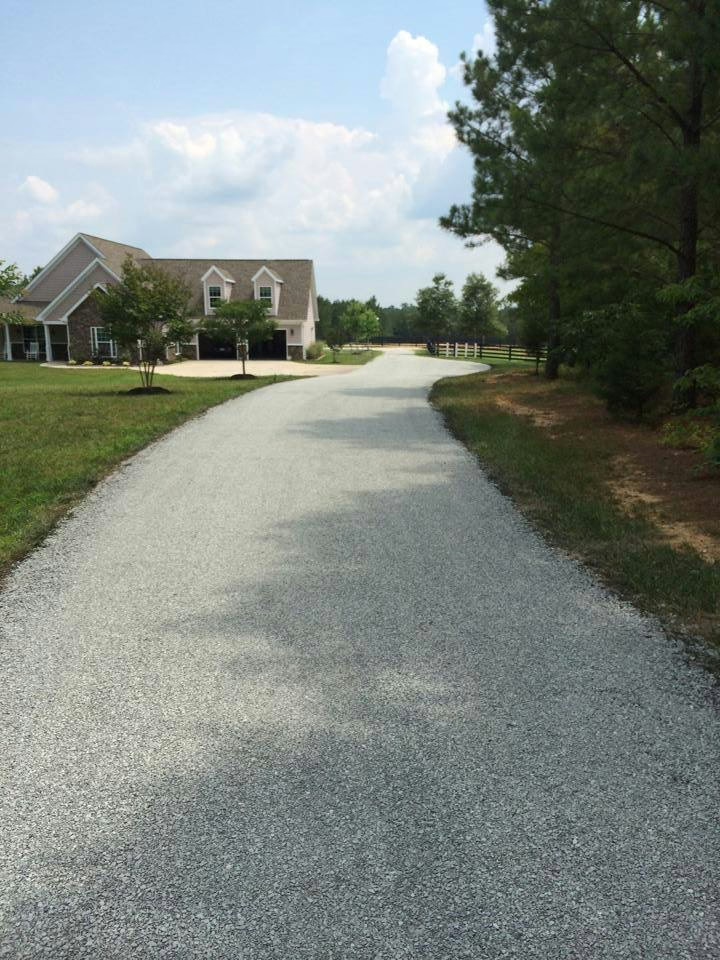
Chip seal blends into natural landscapes. With the right stone selection the driveway reads as part of the property rather than a jet-black stripe cutting across it. This is why tar and chip is popular around Lake Wylie, Waxhaw, Weddington, and estate properties across the region.
Better traction on grades
The textured surface of tar and chip gives more grip than a smooth asphalt finish. On steep drives and curves that matters, especially in wet weather.
Refreshable surface
When a chip seal surface begins to show wear it is refreshed with a new binder and stone application rather than fully replaced. That refresh cycle keeps long-term ownership cost low.
Our tar and chip process
1. Base preparation
Chip seal is only as strong as the base beneath it. We evaluate or build the aggregate base, correct drainage, and shape the driveway crown so water sheds off rather than sitting on the surface.
2. Hot binder application
We spray a uniform layer of hot liquid asphalt binder across the prepared base. Uniform coverage is critical, so we use a distributor truck rather than hand-pouring, and we time the process against ambient temperature so the binder stays hot enough to grab the stone.
3. Stone chip placement
Crushed stone is immediately spread across the fresh binder. We match stone color and size to the look you want, whether that is a warm tan, a soft gray, or a darker charcoal that hides tire tracks.
4. Rolling and lock-in
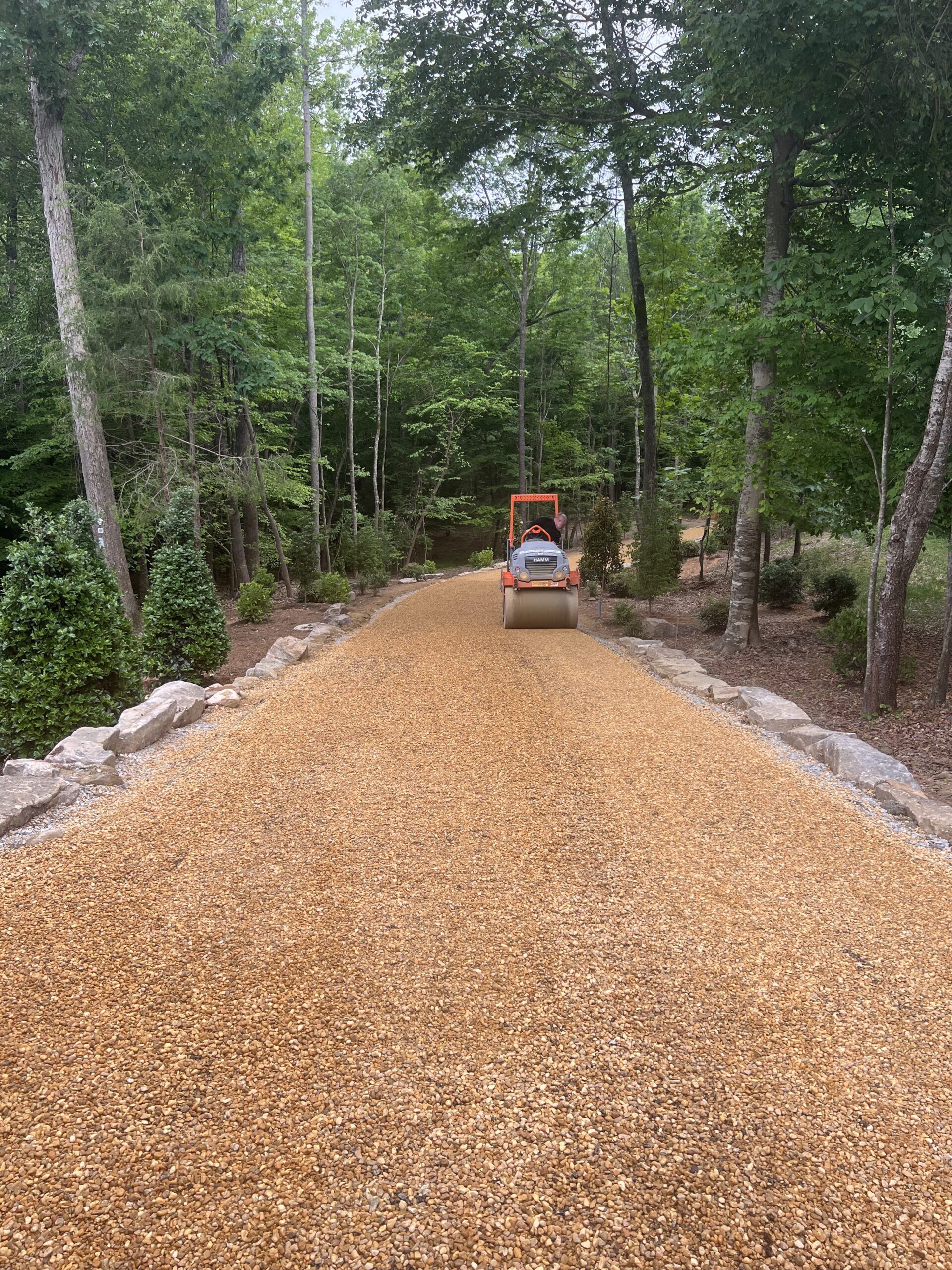
The surface is rolled to seat the stone into the binder. Excess stone is swept back and either reused or removed. Within a few weeks of normal traffic the surface fully locks in.
Choosing between tar and chip and asphalt
If you want the smoothest possible finish, the easiest surface to plow snow off, and the ability to sealcoat on a 3 to 5 year cycle, hot-mix asphalt is the better answer. If you want a lower install cost, a textured natural look, better grip on grades, and a refreshable surface for a long driveway or private road, tar and chip is likely the better fit. We will walk your property and give you an honest recommendation for what actually suits the site and how you use it.
Frequently Asked Questions
What is a tar and chip driveway?+
Tar and chip, also called chip seal, is a driveway surface built by spraying hot liquid asphalt binder onto a prepared base and immediately embedding a layer of crushed stone into it. The stone is rolled to lock it in place, leaving a textured, natural-looking finish that hides the black asphalt binder beneath a layer of colored aggregate.
How is tar and chip different from asphalt?+
Standard asphalt is hot-mix asphalt placed and compacted as a single dense mat. Tar and chip is a two-part surface: binder plus loose stone rolled in. Tar and chip is less expensive to install, provides better traction than smooth asphalt, and offers a wider range of finish colors depending on the stone you choose. Hot-mix asphalt gives a smoother finish and is easier to plow.
How long does a tar and chip driveway last?+
A properly installed tar and chip driveway typically lasts 7 to 12 years before it needs a fresh chip seal coat. Longevity depends on base quality, traffic loads, and drainage. A refresh coat is significantly cheaper than a full asphalt overlay, which is one reason tar and chip is popular for long rural drives.
Is tar and chip good for long driveways?+
Yes. Tar and chip is one of the best surfaces for long residential driveways, private roads, and rural lanes. The per-foot install cost is lower than hot-mix asphalt, the finish blends into rural and wooded settings, and the textured surface provides excellent traction on grades.
Does tar and chip lose loose stones?+
During the first few weeks a small amount of loose chip is normal. Sweep once or twice after install and the surface locks in. After the initial break-in period, chip loss is minimal until the surface is due for its next refresh coat.
Can I sealcoat a tar and chip driveway?+
Standard sealcoating is not appropriate for tar and chip. When the surface begins to show wear, the correct maintenance is a fresh chip seal application, not a sealcoat. This is one of the areas where hiring a chip seal specialist matters, because the process and materials are different from an asphalt seal.